I had the opportunity to attend this year’s World of Coffee conference in San Diego, and it felt less like a traditional exhibition and more like a condensed version of the entire coffee world.
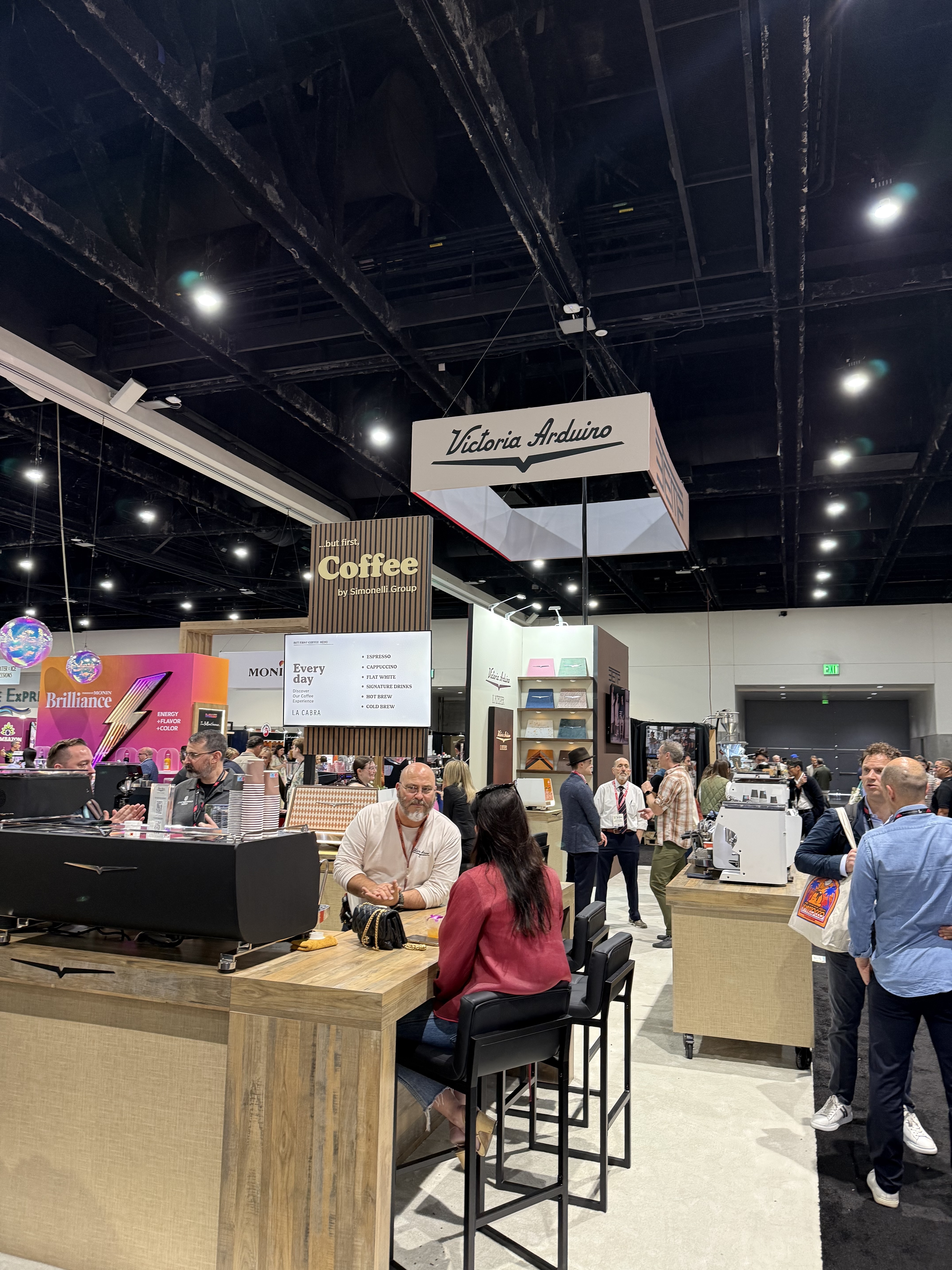 This is the kind of event where producers from origin countries stand next to high-end European roasters. Scandinavian minimalism next to vibrant Latin American storytelling. It’s one of the few places where origin, roasting, and consumption all share the same physical space. It’s also the place where the famous World Barista Championship occurs, where baristas from across the globe compete for the best cup of coffee!
There was so much to explore that it’s impossible to cover everything in one post, but a few themes stood out to me—some expected, and some surprisingly overlooked.
The rise of the robots!
I’m seeing robotic barista arms more frequently in coffee shops, and that trend was clearly present here as well. Companies like Artly, Wingman, and H-Dolphin showcased robotic systems capable of preparing precise, repeatable coffee drinks.
I specifically observed the entire process at Artly and, honestly, enjoyed the coffee made by the arm robot. Precision is key, as they all claim to offer consistent, high-quality coffee drinks. Although they can’t taste the coffee like a human barista, they typically rely on measurable parameters such as flow rates, extraction time, pressure curves, and temperature, which can correlate with taste.
What’s interesting is that the human element doesn’t disappear—it shifts. Baristas are still essential in designing and dialing in the recipes. The robot simply executes.
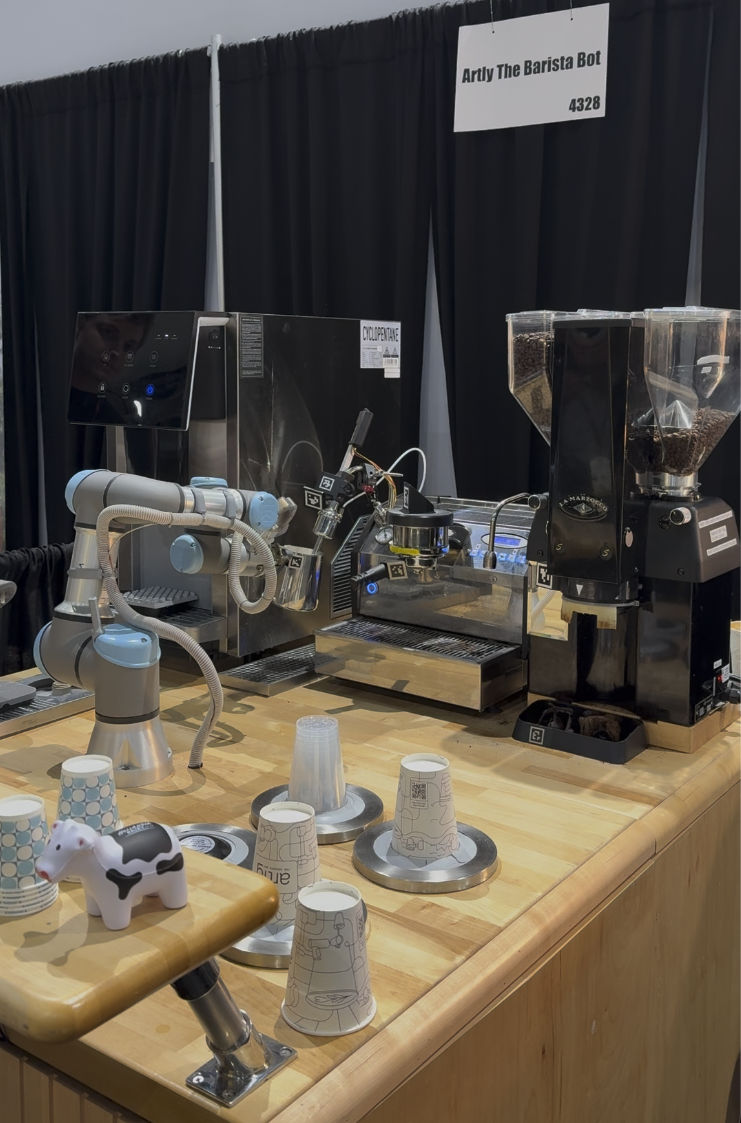
Some systems are even incorporating AI to adapt workflows. For example, Artly utilizes AI models to adapt to new processes. Instead of requiring manual programming for every new coffee recipe, the Barista Bot could automatically generate action sequences in response to a menu update. The Story behind Artly's
You might think these robots are negatively impacting the art of coffee making, but I beg to differ. You still need the baristas to perfect the recipes for each coffee bean, and then the barista bots handle the repetitive work of making coffee orders while ensuring consistent quality. In fact, using these barista bots allows coffee shop workers to focus on the other three C’s (Culinary, Context, and Community). For example, specialty coffee shops, which are typically understaffed and focus on the quality of their drinks, can now, with the use of these barista bots, still offer high-quality drinks while putting more attention on the quality, presentation of the food they serve, or the cleanliness of the coffee tables or the vibe overall. I think it’s a win-win situation!
Home roasting machines are making a splash
World of Coffee San Diego 2026 featured significant innovations in home and small-batch roasting. Many of these small coffee roasters were originally designed for professional coffee roasters to create sample batches, but they are increasingly finding their way into the hands of serious hobbyists. The line between home enthusiast and micro-roaster is blurring, and the industry is responding by adopting sample coffee roasters for home use. Coffee is no longer just something people consume—it’s something more people want to create.
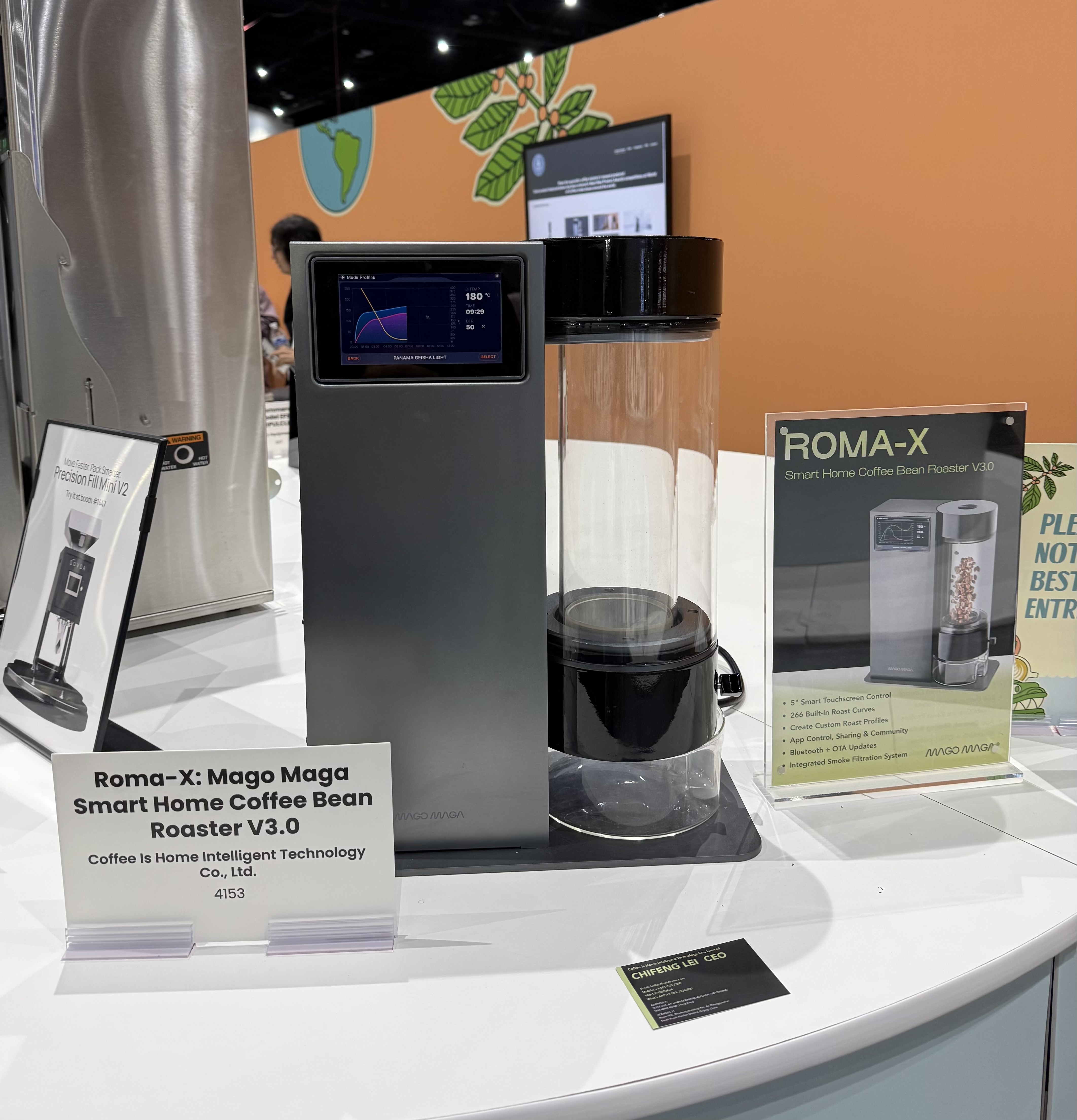 At least two home coffee roasters won the best new product award: the Roma-X from Mago Maga and the BeanGo Cube X. Additionally, popular products at this level of roasting had impressive booths, such as Aillo and Roest. One of the interesting ones I’ve seen is the new small-batch coffee roaster from Roast Master, the FAB 300. Roast Master, as a company, specializes in large-batch coffee roasters, so it was intriguing to see their new small-batch roasters, which demonstrate demand for small-batch roasting at home and in micro-roasters.
What excites me about this shift is that hobbyists are not constrained by scale or strict consistency requirements. They approach roasting more as an exploration and an art than a production process. Coffee is the obvious structural criterion in our 4C’s, and it’s fundamental that coffee innovation can continue to expand in parallel with the daily factory-like environment of making coffee in coffee shops.
The Missing Piece:Context
I noticed there weren't enough vendors focused on products for the coffee shop environment, such as furniture, art, or decorations. You did see the typical paper, ceramic, or glass manufacturers, but even they lacked any sense of art and provided the usual, boring, standard, plain-looking cups.
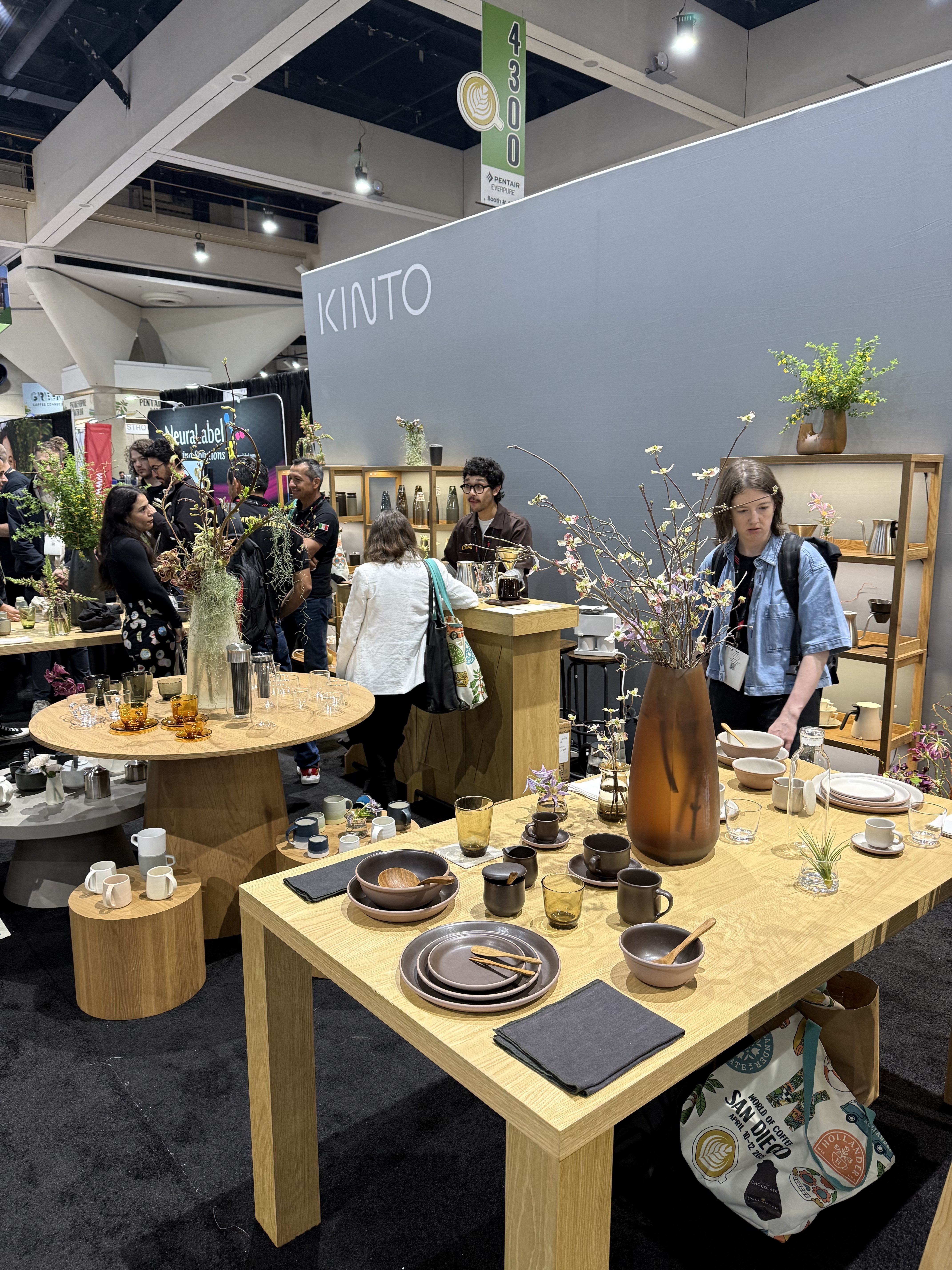 An exception to that was one of my favorite vendors, Kinto. Kinto is a Japanese brand specializing in thoughtfully designed, minimalist drinkware, teaware, and coffee equipment that balances functional, thoughtful design with quiet, everyday elegance. Kinto had a well-sized booth showcasing their collections, and as a Kinto fan, I already have a lot of their coffee drinkware; however, I did notice a couple of new items that intrigued me. Also, Fellow presented their new glass coffee cup collections, which were nicely designed with extra-thick, weighted glass and insightful colors. The matte emerald green and sunset amber colors in their "Pirch" line especially caught my attention—they look stunning on any coffee bar.
I wish in future exhibitions I see more presence from furniture or decoration companies, especially since the World of Coffee is one of the biggest exhibitions for everything related to the coffee industry, and context is what makes coffee shops elaborate, it’s a must!
This event is a must-visit, not just for people in the coffee business but for all coffee lovers
I really enjoyed my time at the exhibition—it’s a paradise for coffee lovers!
World of Coffee brings together every layer of the coffee world—from origin to technology to culture—all in one place.
But what stood out most wasn’t just what was there. It was the contrast between automation and craft, between large-scale production and small-batch experimentation, and between technical innovation and the still-underdeveloped focus on experience and environment.
I also noticed more guests who aren’t in the coffee business but just love coffee, and I’m happy to see this trend. The World of Coffee offers visitors a huge selection of home-brewing machines, grinders, roasters, and endless varieties of coffee beans. I hope even more hobbyists attend in the future, because I believe they can bring fresh, creative, and inspiring ideas to the industry, which is always a good thing.
Comments